Foster + Partners has unveiled plans to create a sustainable office campus for a Hungarian oil and gas company, centred around a 28-storey skyscraper.Intended to set “a new benchmark both for Budapest and Hungary”, the new headquarters for MOL Group will give the Hungarian capital its tallest building.The architecture firm has not revealed how high the tower will be, but it is expected to exceed 96 metres – the height of the Hungarian Parliament Building and Saint Stephen’s Basilica.
The campus is intended to be a model of sustainability, including responsive lighting, heating and ventilation systems; low-carbon energy sources such as photovoltaic panels; and rainwater harvesting and storage facilities.
The scheme also includes large areas of greenery, state-of-the-art workplace facilities, cycling infrastructure and a public “skygarden”. Foster + Partners describes it as “a vision for the workplace of the future”
“This is a landmark project for several reasons, not only for MOL but also for Budapest,” said Nigel Dancey, who is head of the studio for the London-based firm.
“It presents a unique challenge – to ensure that the building meets the functional needs of the organization, follows the highest standards of sustainability, and is respectful of its historic surroundings.”
The tower is designed to rise up out of a podium building, and the two will be united by a curving glass facade.
Inside, offices will be interspersed with outdoor patios and gardens, so that employees can regularly interact with nature. Meanwhile, the skygarden at the top of the building will be accessible to the public.
“As we see the nature of the workplace changing to a more collaborative vision, we have combined two buildings – a tower and a podium – into a singular form, bound by nature,” added Dancey.
“As the tower and the podium start to become one element, there is a sense of connectivity throughout the office spaces, with garden spaces linking each of the floors together.”
Led by architect Norman Foster, Foster + Partners is now one of the world’s biggest architectural practices. The studio, which ranked at number 13 on Dezeen Hot List 2016, has also recently unveiled large development plans for Stockholm, Sydney and Brooklyn.
The online lecture, similar to the podcast, is an easy, often entertaining way of absorbing knowledge and the opinions of thinkers and practitioners from around the world. We’ve gathered together some of our favourite sources for watching architectural lectures online. Ranging from Barbaralee Diamonstein-Spielvogel’s famous American Architecture Now interviews with Frank Gehry in 1980 and Robert Venturi and Denise Scott-Brown in 1984, to Sir Peter Cook speaking at Frankfurt’s Staedelschule in 2012, these open-source films provide invaluable insights into architects and architects throughout recent history.
Featuring conversations with Peter Eisenman and Jack Robertson, Michael Graves, Philip Johnson, Richard Meier, and Kevin Roche – to name only a few – Barbaralee Diamonstein-Spielvogel’s interviews with some of the giants of American post-modernism mark a particular moment in recent architectural history. Diamonstein-Spielvogel’s calm, intelligent interview style is matched only by the responses from her acclaimed interviewees.
SAC’s collection of lectures (ranging from 1:30 to 2:00 hours long) bring together some of the most influential practitioners and academics in architecture today. Patrick Schumacher (Zaha Hadid Architects), Sir Peter Cook (CRAB Studio), Ben van Berkel (UNStudio), Mark Wigley, and Bill Pearson have all spoken from their lectern.
The Harvard GSD’s extensive collection of lectures, conversations and interviews are unmatched. They not only attract ‘big names’ but also successfully incorporate influential startups and fresh minds into their ever expanding collection. It may take you hours to trawl through but the gems that lie within are worth the effort.
Syracuse’s publicly accessible lectures are either thematically organised (i.e. Fundamentals), or arranged by era. Their collections feature lectures by Jimenez Lai (Bureau Spectacular), Sarah Wigglesworth, and Peter Eisenman. They have also uploaded entire symposiums which can provide days of educational watching!
The Berlage is a Dutch postgraduate international institute where some of the world’s most renowned architects, thinkers, designers, photographers and other professionals come to share, exchange and critically reflect upon their ideas. Over the last 23 years, they have built up an extensive archive of seminal lectures, of which is now ArchDaily sharing their newly digitised collections.
Although not strictly architecture related, the lectures uploaded by CreativeMornings are inspiring nonetheless. Originally set up as “a breakfast lecture series for the creative community” in New York City, their compendium of lectures – filmed in places from Amsterdam and Auckland to Berlin and Oslo – are both accessible and extensive.
This is a real treasure trove of architectural talks, student presentations, and films. London’s AA have committed to making their entire archive available, for free, online. If their collection doesn’t have it, it’s not worth watching!
Bjarke Ingels (2015):
Other excellent sources of online architectural lectures include (in random order):
Stephen Fanuka knows all about making tough decisions under pressure. Several celebrities and affluent homeowners have placed seven-figure remodeling projects in his trusted hands. In recent years, the range of decisions he must make for every job has become even more overwhelming. That’s due in no small part to the rise of the smart home, with automated controls for everything from blinds and lights to the swimming pool and thermostat.
Not too long ago, these computer-driven systems were the exclusive playthings of the elite. Now, they’re an expectation for any client, no matter the budget nor the dwelling they live in.
“The great thing about home automation is that it can go into anything,” Fanuka says. “It can go into period pieces, it can go into traditional, into eclectic, it can go into modern. You can have any home automated. It can be 600 years old or two days old.”
Fanuka is used to working with unlimited budgets and massive spaces. But when it comes to automating your abode, the same expert rules apply for any space. And with smart-home tech now ubiquitous, there’s only one way to wow your visitors: You need a professionally installed system that becomes a holistic part of your house.
“Plug-and-play to me, it doesn’t do anything,” Fanuka explains. “You’ll never go into someone’s home and be wowed by their plug-and-play system. There’s nothing to look at. It’s not true to what the intention is in a really nice home.”
The last thing you want to do after renovating your home is to update or upgrade everything in a few years. To avoid having to swap out outdated or incompatible components, Fanuka suggests sticking with big-name brands. They may not be the cheapest options, but they have a proven track record and a reliable upgrade cycle.
It’s especially important when it comes to your audio/video systems, as they’ll likely be the centerpiece of your home life. But right now, the landscape is a bit confusing: There are a growing number of multi-room audio systems, and new televisions are offering resolution and picture-quality capabilities that put last year’s models to shame. Fanuka says that in some ways, these TVs are “ahead of themselves,” as they support technologies that will become mainstream in the next few years.
Fanuka says one TV, in particular, is in especially high demand, and its unique features make it a perfect renovation pick. Sony’s A1E BRAVIA OLED TV has what is considered to be the best panel technology on the market, gorgeous color reproduction, and a fetching physical design. But beyond its jaw-dropping picture quality, what Fanuka likes most is the way it produces sound: The display doubles as a giant speaker.
But that’s far from the only benefit the A1E BRAVIA OLED brings to his projects. Sony’s stunning set is compatible with Google Home and its extensive smart home ecosystem. You can bring up your next binge session just by asking a Google Home to play it on the TV. Sony has been focusing on integration both with voice controlled devices and with custom control systems. It’s one of several reasons why CE Pro picked Sony as its best custom-integration vendor for 2016; the company’s TVs also work seamlessly with Fanuka’s favorite home-automation systems, including Crestron, Control4, and Savant.
“I have 17 renovations going on right now, and 10 or 11 of them are going to have this TV be part of it,” Fanuka says. “Granted, my clients can afford anything. They want this one because it’s the best. But because this TV is also a massive speaker, you don’t need to embed speakers in your walls or the ceilings. We can really play with that. The picture quality is awesome, and it’s something that won’t need to get upgraded too often. It’s a huge plus.”
Sound Advice
Having your TV double as a big speaker is especially beneficial for certain renovation projects. Fanuka says one of his biggest challenges is building these ultimate A/V systems into Manhattan apartments, as they often don’t have much vertical space to work with. Fanuka loves drop ceilings when it comes to concealing wires and cables, but that often isn’t an option in these spaces. Sony’s picture-perfect TV can actually save his client a lot of money.
“In Manhattan, you already have 8-foot ceilings,” Fanuka explains. “Nobody wants to drop that ceiling another three inches, so you end up doing perimeter soffits. The clients would like to avoid that, and now they can, so it reduces the cost of construction.”
So, how about running wires behind the baseboards? It may seem like a neat, logical solution, but Fanuka much prefers using drop ceilings or drop soffits to conceal cables. The reason is that homes aren’t entirely stationary, and drop ceilings and soffits give those wires much more room to breathe.
“I’m opposed to running wire behind baseboards or crown moldings, because even if nine out of ten times you don’t hit that wire with a nail, you may still skim it,” Fanuka says. “A lot of houses and structures move ever so slightly over time, so it could short itself out six months later. And it’s impossible for me to find the problem for you. I just have to re-run the wire.”
A Conduit for Growth
According to Fanuka, another way to avoid costly short-term re-renovations is to plan for a year or two down the line. Technological innovation is happening at such a fast pace, you’re sure to want the next big thing soon enough. And the key to adding them seamlessly to your system is to use some simple plastic tubes.
“Try to run conduits, plastic pipes, outside the walls from the system itself,” Fanuka says. “That way, you can always snake new wires through them without ripping walls open. It’s so simple for someone to forget something or add something to their system at the last minute. Wires aren’t necessarily the cheapest thing you’re going to buy, but they’re inexpensive compared to having to open up a wall and run something extra after you’ve just finished them, and they’re all painted and done.”
Don’t Eliminate All “Wall Acne”
Another important trend is that everyone now wants to control everything from their smartphones and tablets. Fanuka loves the convenience; he says he and his family use their own mobile devices for much of their in-home tinkering.
But he also cautions against using phones and tablets for everything. For one, your device’s IP address tends to wander; so you annoyingly lose total control of your abode from time to time. And if you lose your phone, break it, or find yourself without juice or a charger, you’ll be out of luck, too. Fanuka recommends keeping all the main remotes handy, just in case a mobile mishap happens.
For custom-installed systems, there’s been a major recent backlash against “wall acne,” the wall-mounted panels and control units for various smart-home components. After all, they’re an eyesore, and they may seem superfluous if you can control everything from your phone. However, Fanuka cautions against ditching all those panels and keypads entirely. Instead, you should choose smarter installation locations for these critical control centers.
“You still need the switches, you just have to be smart about where to put them,” Fanuka says. “Find someplace for the switches, even if they’re in a closet or a main control in the front hallway. How are you going to turn the lights on if you left your phone somewhere?”
The Sony A1E BRAVIA OLED TV’s Google Home capabilities also help eliminate unsightly control units. By using the television’s voice controls—or by controlling the TV with a simple Google Home speaker—you can keep remotes and wall panels hidden away. And because the A1E BRAVIA OLED TV offers built-in Chromecast capabilities and the robust Android TV platform, it’ll keep your living room free of dongles and streaming boxes for a more streamlined look.
Ask for What You Need
Despite the always-evolving state of technology, Fanuka says his biggest challenge with any project is often the client themselves. Sometimes, they’re so excited about their new toys that they forget to pay attention when the system programmer teaches them how to use it. It results in a lot of support calls or complaints that the contractors didn’t do the best job.
Other times, clients fail to delineate everything they want in their new home. If you are embarking on a home-renovation project, make sure to write a complete list of the features you want in your dream home. Otherwise, fairly simple things may be lost in the mix.
“I had an A-list movie star, and we spent $3 million renovating their whole apartment,” Fanuka explains. “So he moves in and says, ‘I can’t wait to plug in my old-school rotary phone.’ He shows me this old yellow rotary phone, and all I can think is ‘Oh no, I don’t recall running a phone jack anywhere.’ Nobody uses a hardline phone anymore! We put a phone jack behind a TV for cable, but we don’t do it for bedside tables or kitchens or anywhere you’d put a phone.”
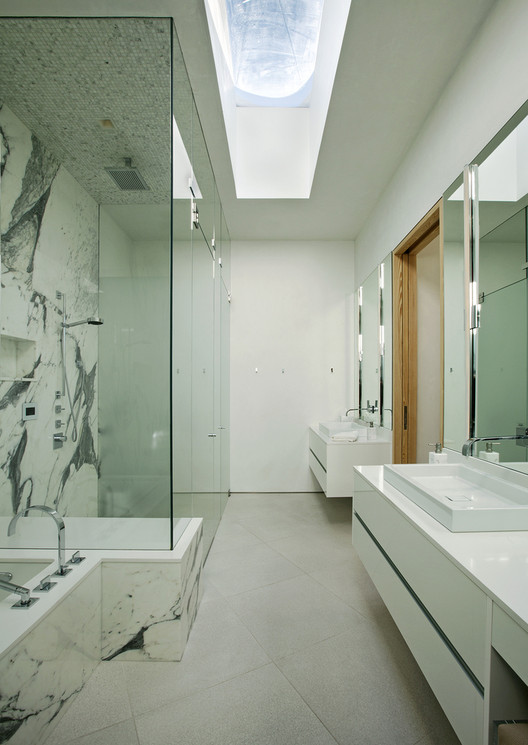
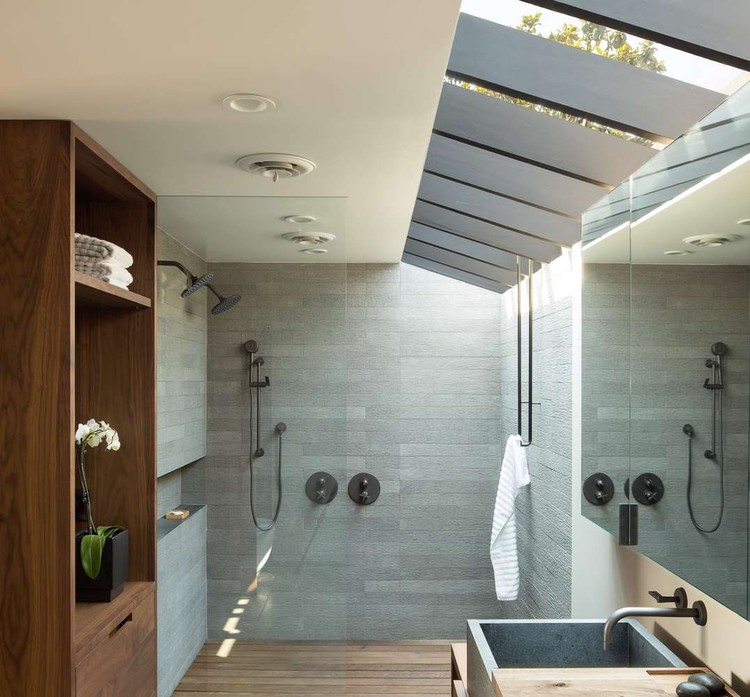
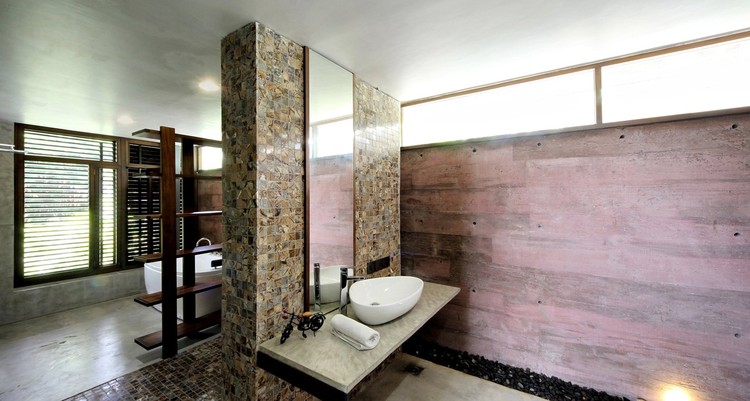
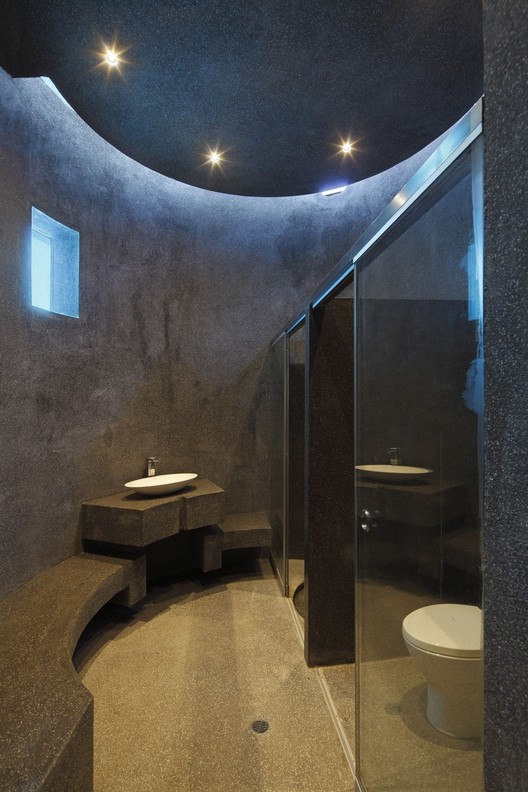
The bathroom is one of the most static and traditional spaces in any residence. However, in recent times, this space has gained an identity that relates directly to the interior and exterior design of the house. As architects, we strive to create a warm, dynamic and attractive space for users.Today, bathrooms that include new technologies, clean projects, integrating new materials with an emphatic use of color are highlighted. Next, we compiled a selection of 34 toilets that reflect this trend.
There’s a creepy transformation taking over our cities, says architecture critic Justin Davidson. From Houston, Texas to Guangzhou, China, shiny towers of concrete and steel covered with glass are cropping up like an invasive species. Rethink your city’s anatomy as Davidson explains how the exteriors of building shape the urban experience — and what we lose when architects stop using the full range of available materials.


 Arm
Arm